Dr. Gymbro
←

#rhodiola rosea

2 articles
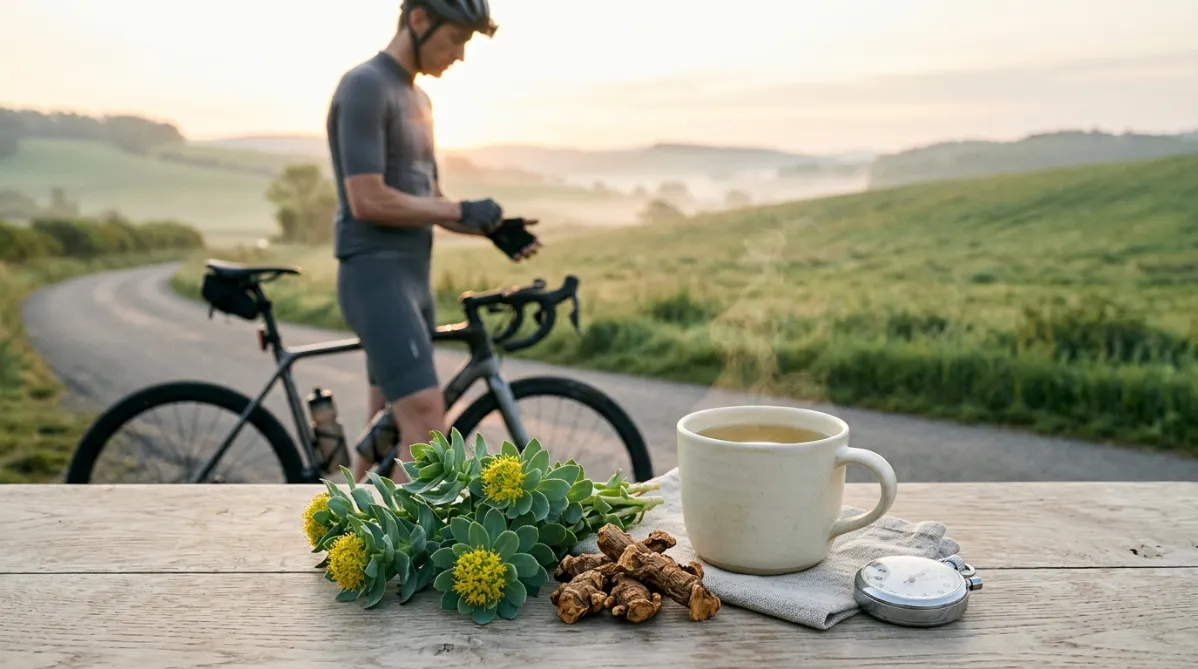
A landscape editorial photograph in soft natural morning light. In the foreground on a rustic light oak table, a small cluster of fresh Rhodiola rosea plants with thick succulent blue-green leaves and tiny golden-yellow flower clusters rests beside a few dried, knobby amber-brown rhizome pieces. A matte ceramic cup of pale golden herbal tea sits beside them, with a thin curl of steam and a small linen cloth. The plants and roots are sharp, with fine texture and dewy highlights.

In the softly blurred background, a lean cyclist in a fitted charcoal jersey stands beside a road bike on a quiet country lane at sunrise. Rolling green hills fade into pale mist behind them, and warm light rims the rider's shoulders. The cyclist tightens a glove, calm and focused, in a pre-ride moment of preparation. A water bottle is mounted on the bike frame, and a simple analog stopwatch with a brushed metal casing lies on the table near the herbs, hinting at timed effort.

The palette is muted and modern: sage green, warm cream, soft gold, and slate gray, with gentle peach tones from the sunrise. Shallow depth of field, a clean, airy composition with generous negative space on the right third for headline text, and subtle film grain. The mood is calm, health-conscious, and quietly athletic, like a premium wellness and sports science magazine cover. No text, no logos, no futuristic elements.
science research

Rhodiola Rosea: ¿Un pre‑entrenamiento sin estimulantes para el cardio intenso?

BY DR. GYMBRO ·

Un ensayo cruzado de 2013 encontró que una dosis única de 3 mg/kg de Rhodiola rosea, tomada una hora antes de una prueba de ciclismo de 6 millas, redujo el tiempo final de 25,8 a 25,4 minutos. La frecuencia cardíaca del calentamiento bajó de 140 a 136 lpm y la percepción del esfuerzo pasó de 6,6 a 6,0. La ventaja es pequeña, alrededor del 1,5 %, y proviene de sólo 18 personas, por lo que no es un milagro. Sin embargo, el hecho de que se perciba menos esfuerzo la convierte en una opción intrigante sin estimulantes para atletas de resistencia. A continuación se muestra lo que revelan los datos y cómo probarlo de forma sensata.
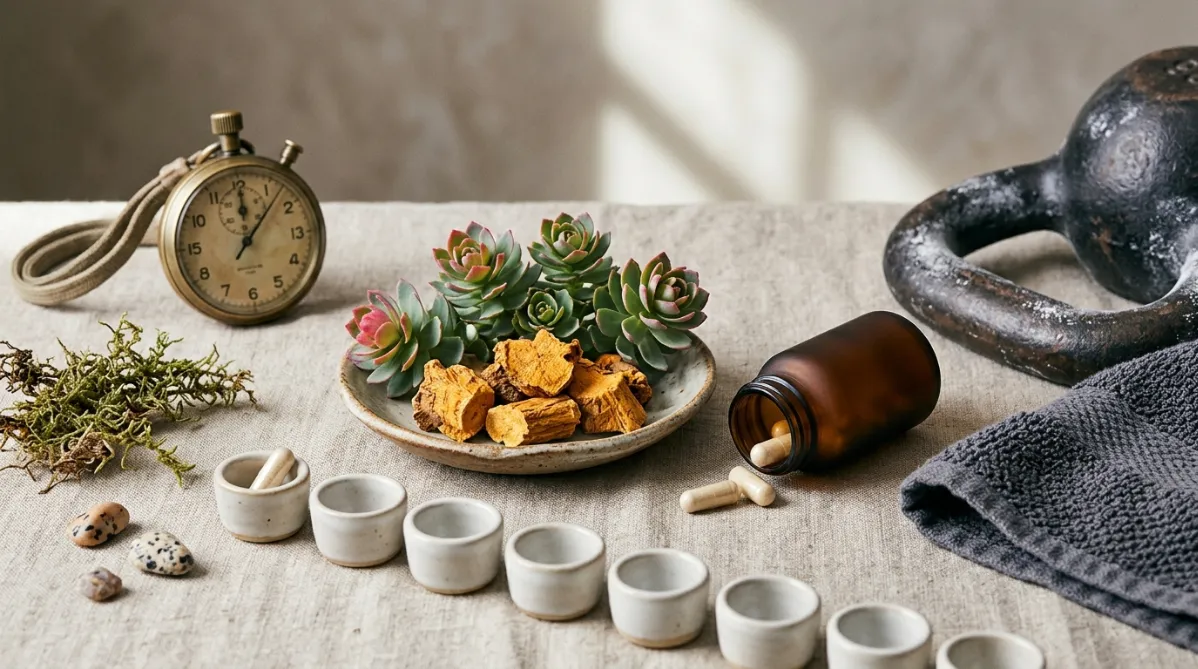
A wide, editorial still life photographed in soft natural window light on a pale oatmeal-colored linen surface. At the center sits a small, rustic ceramic dish holding a handful of dried golden-orange Rhodiola rosea root pieces and a few fresh, fleshy green-gray succulent rosettes with rosy-pink tips. Beside it, a single matte amber glass capsule bottle lies on its side, with two cream-colored capsules spilling out. On the left, a minimalist analog stopwatch with a brushed brass case rests slightly out of focus, its hands suggesting a duration just past the quarter-hour mark. On the right, a worn, chalk-dusted steel kettlebell handle and a folded charcoal gym towel fill the negative space, hinting at lifting without showing a full gym scene.

In the foreground, a neat row of seven tiny ceramic pill cups arranged in a gentle diagonal line, the first cup holding one capsule and the rest sitting empty, as a quiet visual metaphor for a single dose versus daily dosing. A sprig of dried alpine moss and a few small speckled pebbles add organic texture. The background is a softly blurred warm-gray plaster wall with a gentle gradient shadow cast by a window frame, creating diagonal light stripes across the scene.

The palette is muted and earthy: sage green, terracotta, warm cream, brushed brass, and soft charcoal, with one subtle pop of coral from the Rhodiola tips. Shallow depth of field, crisp focus on the root and capsules, and fine film-like grain. The composition leaves generous clean negative space in the upper left for a headline overlay. The overall feel is a modern wellness and science journal: calm, tactile, minimal, and sophisticated, with a slightly moody, high-end magazine look. There is no text, no people, and no futuristic elements.
nutrition

200 mg de Rhodiola aumentan 24 segundos; cuatro semanas de consumo diario no aportan nada

BY DR. GYMBRO ·

Una sola dosis de 200 mg de Rhodiola rosea tomada una hora antes del ejercicio incrementó el tiempo a la extenuación de 16,8 a 17,2 minutos y elevó el VO₂‑máx en un ensayo cruzado doble ciego. La sorpresa es que cuatro semanas de consumo diario no reforzaron ese efecto ni modificaron ninguna variable medida. La ganancia fue pequeña, apenas 24 segundos, y la fuerza, el tiempo de reacción y la atención permanecieron sin cambios. Aquí tienes lo que realmente encontró el estudio, quién podría probar una dosis aguda y por qué no deberías contar con “cargar” la rhodiola.

This page is available in